

 简体中文
简体中文 にほんご
にほんご Deutsch
News Release
Under the latest battery regulations in the European Union, all electric vehicles entering the European market must provide battery "full lifecycle carbon footprint" data within the next two years. This change has made many Chinese wire harness companies suddenly realize that in the past, they only focused on the conductivity and cost of a single wire, but now they must answer a new question: "How much carbon does your wire emit during the production process
The competitive logic of the entire industry is undergoing a profound restructuring from "price priority" to "carbon transparency".
At the beginning of this year, a wire harness manufacturing company located in Zhejiang lost the opportunity to supply a German new energy vehicle company due to its failure to provide carbon data that complies with the PEF (Product Environmental Footprint) methodology as required by the European Union. Similar cases are increasing - with policies such as the EU Carbon Border Adjustment Mechanism (CBAM) and the US Clean Competition Act coming into effect, "green wiring harness" is no longer an optional selling point, but is becoming an essential passport to enter the international market.
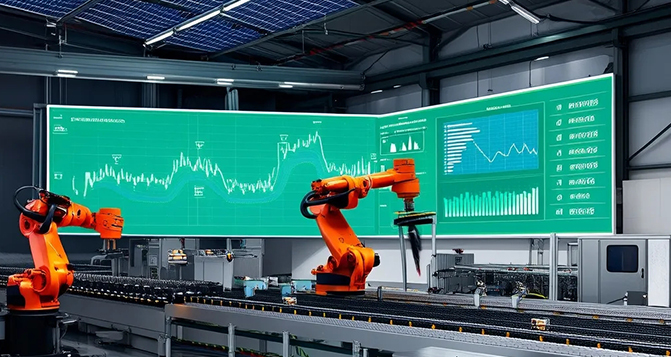
The wiring harness may seem like just a connecting component in a car, but its carbon footprint runs through every link from raw materials to vehicle assembly:
The copper smelting process accounts for over 60% of the total carbon emissions from wire harnesses;
The production process of PVC and other sheath materials releases a large amount of volatile organic compounds;
Cross border logistics transportation further increases the implicit carbon content of products.
According to industry calculations, the average carbon footprint of traditional low-voltage wiring harnesses is about 1.8 kilograms of carbon dioxide equivalent per meter, while high-voltage wiring harnesses can reach as high as 4.3 kilograms per meter. And some leading vehicle companies have explicitly requested that by 2030, carbon emissions from wiring harnesses be reduced by 50% compared to now.
How to move towards a 'zero carbon harness'? At present, the industry mainly focuses on three paths:
Material Innovation: Regenerated Metals and Biobased Sheath
Application of recycled copper: Using internationally certified recycled electrolytic copper can significantly reduce carbon emissions in the raw material process. Domestic enterprises have achieved the comprehensive use of high-purity recycled copper in automotive wiring harnesses and obtained third-party carbon neutrality certification.
Environmentally friendly insulation materials: New sheath materials such as bio based TPU and PLA are gradually replacing traditional petroleum based plastics, which are not only biodegradable but also significantly reduce production energy consumption.
Green flame retardant technology: replacing brominated flame retardants with halogen-free flame retardant systems to improve safety while meeting increasingly stringent environmental regulations.
Green electrification in manufacturing process: photovoltaic and energy storage empowering production line
More and more wire harness companies are incorporating green electricity into their production systems:
Some large production bases have installed rooftop photovoltaics, which can generate a considerable proportion of production electricity;
Supporting energy storage system, utilizing low valley electricity storage at night to achieve low-carbon or even zero carbon operation during the day;
Outward oriented enterprises provide "zero carbon production" certification for every meter of wire harness by purchasing green certificates.
Digital carbon management: full lifecycle traceability
Building a carbon data traceability system from raw materials to finished products using IoT and blockchain technology:
Generate a unique carbon data identifier upon receipt of raw materials;
Real time collection of energy consumption in various production processes and automatic conversion into carbon emissions;
The finished product comes with a traceability QR code, allowing customers to view the full chain carbon footprint report at any time.
Some companies have stated that although the price of "carbon transparent wire harness" has slightly increased, it has actually received more overseas orders because it conforms to international trends.
The Challenge of China's Wire Harness Industry Under the Pressure of Standards
Faced with international carbon regulations, domestic enterprises generally face several major difficulties:
Lack of professional carbon accounting talents and teams;
Difficulties in collecting carbon data upstream of the supply chain;
Lack of internationally recognized third-party verification qualifications.
Breaking the deadlock: Building a green industry ecosystem
It is difficult for a single enterprise to achieve full chain carbon management, and new collaborative models are emerging in the industry:
Industry Chain Green Alliance: Copper, cable, and wire harness enterprises jointly establish a closed-loop system for recycled materials and share a carbon data platform;
Regional green power sharing mechanism: pilot park level green power trading in industrial agglomeration areas to help small and medium-sized enterprises use clean power at lower costs;
Third party service integration: Professional institutions provide one-stop services from carbon accounting, certification to labeling, reducing enterprise costs through cost sharing.
Industry analysis indicates that in the coming years, wire harness companies lacking carbon management capabilities will gradually be excluded from the international mainstream supply chain.
Outlook: Green competitiveness becomes a new dimension
Currently, competition in the wiring harness industry has expanded from traditional dimensions such as price, delivery, and quality to new dimensions such as carbon emissions, recyclability, and ecological impact. Those enterprises that have completed green transformation first are not only able to hold onto the export market, but also more likely to gain brand premiums.
As a procurement manager from a host factory said, "We are no longer just comparing whose prices are lower, but starting to focus on whose wiring harnesses are more 'green'
In this future oriented industrial transformation, every seemingly ordinary wire harness is becoming an important carrier for China's manufacturing to move towards sustainable development.
Special statement: The content is sourced from Wiring Harness World for reference only, to convey more information and not for profit. Copyright belongs to the original author. If there is any infringement, please contact us for deletion.