

 简体中文
简体中文 にほんご
にほんご Deutsch
News Release
1、 Technological innovation drives industry development, multidimensional progress accelerates industrial application
In 2026, the connector industry is expected to achieve multiple advancements in performance, appearance, and compatibility driven by continuous technological innovation. The rapid growth in demand for high-speed transmission will drive the development of connectors towards larger bandwidth and lower latency, especially in key application scenarios such as data centers and 5G base stations. Connectors that support transmission rates of over 100Gbps are expected to become the market leader to meet the needs of real-time processing of large-scale data.
The trend of device miniaturization and structural integration will be further highlighted. With the increasing trend of lightweight and compact products in consumer electronics, wearable devices, and automotive electronics, the demand for micro connectors and board to board connectors will continue to rise, and their packaging size is expected to be further reduced while still maintaining high reliability and anti-interference performance. In addition, the integration of intelligent technology will become a new trend in the industry, and intelligent connectors with operational status monitoring and fault warning capabilities will gradually be applied in fields such as industrial automation and new energy vehicles, improving system operational efficiency through real-time data feedback.
Environmental standards and durability performance will also become key directions for technological research and development. Driven by the global carbon neutrality goal, connector products using environmentally friendly materials and low-power designs will be more popular. Meanwhile, connectors that can withstand extreme temperatures, resist vibration and corrosion will become an important requirement in harsh application environments such as industry and automobiles.
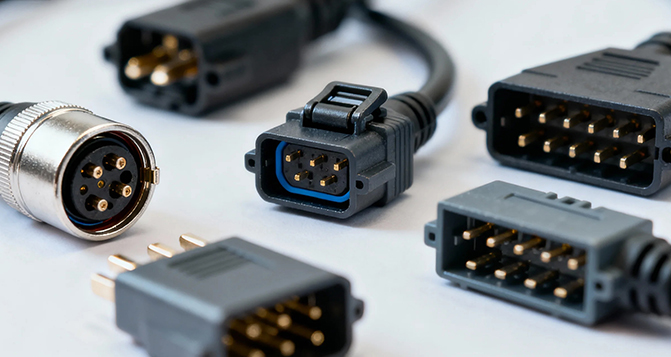
2、 The application fields continue to expand, and the demand for key industries has significantly increased
In 2026, the growth of the connector industry will closely rely on the expansion and upgrading of downstream key application fields, of which new energy vehicles, industrial Internet, consumer electronics and communication technology will be the main driving force.
The field of new energy vehicles remains an important source of connector demand. With the continuous increase in the global popularity of new energy vehicles and the deepening of vehicle intelligence and electrification, the usage of in vehicle connectors has significantly increased, covering multiple subsystems such as battery management, power control, and autonomous driving sensing. High voltage connectors and high-speed signal connectors will become the focus of market attention, and it is expected that the annual growth rate of the connector market in this field will remain above 20% by 2026.
The extensive promotion of industrial Internet will bring new growth opportunities for industrial connectors. Under the leadership of Industry 4.0, factory automation and intelligent manufacturing have put forward higher requirements for equipment interconnection. Industrial connectors need to maintain stable connections in harsh environments, while being compatible with new technologies such as industrial Ethernet and the Internet of Things, supporting efficient data transmission and collaborative operations between devices. In addition, the rapid development of emerging industrial scenarios such as robots and intelligent warehousing will further expand the application scenarios of industrial connectors.
The demand in the field of consumer electronics presents the characteristics of "stable scale and improved quality". Traditional consumer electronics products such as smartphones and tablets still have considerable market stock, and the precision and reliability requirements for micro connectors continue to increase; The rapid rise of emerging products such as AR/VR devices and smart wearables will drive the development of new types of connectors such as flexible connectors and wireless connectors to adapt to the special forms and usage needs of products.
The continuous evolution of communication technology has brought lasting momentum to the connector industry. The comprehensive coverage of 5G networks and the pre research and development of 6G technology will promote the demand for base station construction and communication equipment updates. High frequency and high-speed connectors will become key components of communication infrastructure; At the same time, the large-scale construction and upgrading of data centers have also put forward higher requirements for hardware connection performance such as servers and storage devices, promoting the evolution of data center connectors towards high-density and low-power direction.
3、 Adjustment of competitive landscape, synchronous promotion of regional collaboration and supply chain upgrading
In 2026, the global connector market competition pattern is expected to present a situation of coexistence of "regional differences and coordinated development". The Asian region remains a key area for the growth of the global connector market, and countries such as China, South Korea, and Japan will continue to maintain their leading positions in the industry with complete industrial chain support, huge downstream markets, and continuous technological investment. Among them, China, as the world's largest producer and consumer of connectors, is expected to continue to increase the share of local enterprises in the mid to low end market. At the same time, the import substitution process in the high-end field will also accelerate, gradually changing the situation dominated by international brands.
The North American and European markets will continue to focus on the high-end connector field, maintaining technological advantages in segmented markets such as aerospace, medical equipment, and high-end automotive manufacturing. International leading enterprises will consolidate their position through technology research and development and mergers and acquisitions. However, influenced by global supply chain adjustments and regional trade policies, the European and American markets will pay more attention to the localization, security and controllability of supply chains, which creates new development opportunities for connector companies in the region.
The improvement of supply chain and the enhancement of risk resistance will become a common concern in the industry. In recent years, frequent fluctuations in the global supply chain, rising raw material prices, and poor logistics have brought certain pressure to the production and operation of connector enterprises. In 2026, connector companies will further strengthen their supply chain management by establishing long-term partnerships with upstream material suppliers, diversifying production bases, and improving inventory management levels to reduce potential supply chain risks. At the same time, the collaboration between upstream and downstream of the industrial chain will become closer, and joint research and development between connector companies, downstream equipment manufacturers, and upstream material suppliers will become more normalized, thereby achieving precise alignment between products and market demand.
4、 Opportunities and challenges coexist, and the industry is moving towards a stage of high-quality development
In 2026, while the connector industry is facing vast opportunities, it also faces many challenges. On the one hand, the pace of technological updates is accelerating, and enterprises need to continuously invest a large amount of research and development resources to keep up with technological trends, which puts higher demands on the financial strength and technological capabilities of small and medium-sized enterprises; On the other hand, global market competition is becoming increasingly fierce, with price competition and technological competition intertwined. Enterprises need to seek a dynamic balance between cost control and technological innovation. In addition, external factors such as fluctuations in raw material prices and stricter environmental policies have also brought certain uncertainties to the industry.
Overall, the long-term development prospects of the connector industry remain promising. With the deepening of the digital economy, the demand for device interconnection and data transmission in various industries continues to increase, providing broad growth space for the connector industry. At the same time, the capabilities of domestic enterprises in technology research and development and product quality continue to strengthen, and import substitution and globalization layout continue to advance, which will promote the transformation of China's connector industry towards a high-quality and high value-added stage.
In 2026, the connector industry will steadily develop under the guidance of technological innovation, accompanied by the expansion of downstream application fields. The market competition pattern will continue to evolve, and the industry as a whole will move towards a more mature, efficient, and diversified development stage. For enterprises, keeping up with technological trends, focusing on core markets, and optimizing supply chain systems will become the key to winning the initiative in competition.
Special statement: The content is sourced from Wiring Harness World for reference only, to convey more information and not for profit. Copyright belongs to the original author. If there is any infringement, please contact us for deletion.