

 简体中文
简体中文 にほんご
にほんご Deutsch
News Release
In 2025, the automotive industry's focus is shifting from traditional indicators such as engines and acceleration to new issues centered on specific components, standards, and application models. Topics such as the safety controversy surrounding electric concealed door handles, the new national standard for power batteries, and the benefits of vehicle-to-infrastructure interaction frequently become hotspots, reflecting that the core competitiveness of automobiles has shifted from mechanical performance to intelligence, safety, and ecological integration capabilities. Small components are becoming a key force driving industrial transformation.
Presenting the macro changes in the industry from a micro perspective:
1. Large AI models are reshaping vehicle perception, decision-making, and interaction. Vision-Language Models (VLMs) primarily drive the upgrade of intelligent cockpits; Vision-Language-Action Models (VLA) have become the focal point of competition in high-level autonomous driving; World Models (such as Huawei's approach) directly predict and plan based on environmental signals. Amidst this boom, computational power and data support remain key challenges.
2. As distributed energy storage units, Vehicle-to-Grid (V2G) electric vehicles can interact bidirectionally with the power grid, allowing users to participate in peak shaving and profit making. Policies have been introduced intensively to promote pilot projects, and industry chain enterprises such as Guangzhou Automobile Group and Teclast have already deployed relevant technologies and facilities to promote large-scale applications.
3. The new national standard for power battery safety, released in 2025, elevates the thermal diffusion requirements to "no fire, no explosion" and introduces new tests such as bottom impact, thus being dubbed "the strictest in history". This new standard is forcing technological upgrades and driving the industry towards safer and more standardized development.
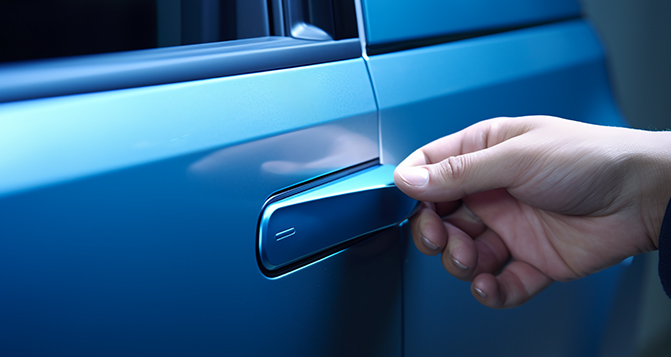
4. The hidden electric door handles of car doors have become a hot topic due to their aesthetic appeal and intelligence, but concerns have been raised about potential safety hazards such as failure to spring back after a collision and freezing in low temperatures. The draft for public consultation of the new national standard requires the retention of a mechanical emergency opening function to ensure occupants can escape in the event of an accident.
5. Solid-state batteries, with their advantages such as high energy density and high safety, are regarded as the direction for the next generation of batteries. In 2025, multiple companies announced their progress, but mass production still faces challenges related to technology and cost. The industry is standardizing naming conventions to avoid conceptual confusion.
6. The "People-Vehicle-Home" ecosystem is accelerating the interconnection of automobiles, homes, and personal devices, aiming to build a people-centered intelligent living system. Home appliance companies such as Haier and Midea have partnered with automobile companies, breaking down ecological barriers and promoting a new business model of "hardware + software + services".
7. The year 2025 is regarded as the inaugural year for the mass production of humanoid robots, which will deeply integrate with automobile manufacturing in terms of demand and technology. For instance, CATL has already put into use a battery production line equipped with humanoid robots. Auto parts companies are also leveraging their manufacturing advantages to enter the robotics arena and seek new growth opportunities.
8. Zero-gravity seats, designed based on the concept of weightlessness in aerospace, have become an important configuration for enhancing driving comfort and are being popularized in more vehicle models. However, the inclined posture of these seats lacks a unified safety standard, and how to ensure safety in coordination with seat belts and airbags remains a technical challenge.
The changes in these eight areas collectively depict a new landscape of the automotive industry evolving towards intelligence, safety, and ecology.